You describe the case. It returns the filing.
The lawyer writes in plain language. MINUTA assembles the filing in the firm's own format, tags each argument with the source it came from, and sends it to the review queue. Nothing is treated as final.
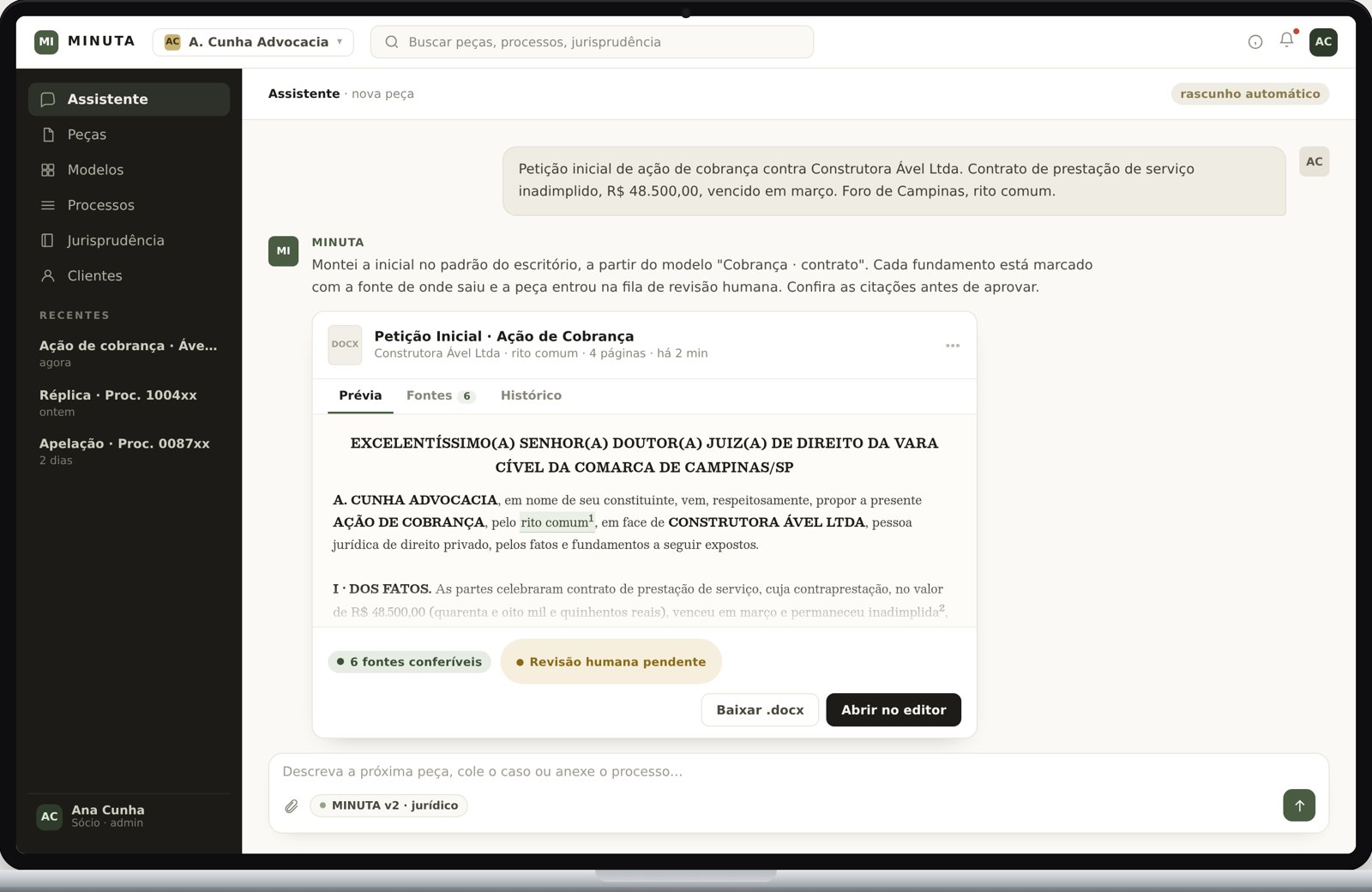
A. Cunha Law Firm spends hours every week writing filings that follow the same skeleton: statement of claim, reply, appeal. The text changes little, the manual work changes nothing. Generic AI tools promise to solve this, but they invent case law and cite articles that don't exist. In a filing that goes into a court case, a source error is not a detail, it's a risk.
The lawyer writes in plain language. MINUTA assembles the filing in the firm's own format, tags each argument with the source it came from, and sends it to the review queue. Nothing is treated as final.
Much of a law firm's work is assembling standardized filings: same structure, same arguments, different client. Automating that is obvious. The problem is the middle of the road. Generic AI writes fast and cites elegantly, but it cites wrong: it invents precedents, swaps article numbers, attributes rulings that never existed. In a context where the text goes signed into a court case, that is not a tolerable bug, it's the difference between saving time and creating liability. That's why MINUTA was not designed to write on its own. It was designed to write with traceable sources and stop before the signature.
Filings in the firm's own format. Statements of claim, replies, and appeals with the structure, tone, and clauses A. Cunha already uses. The system learns the format, it doesn't impose a generic one.
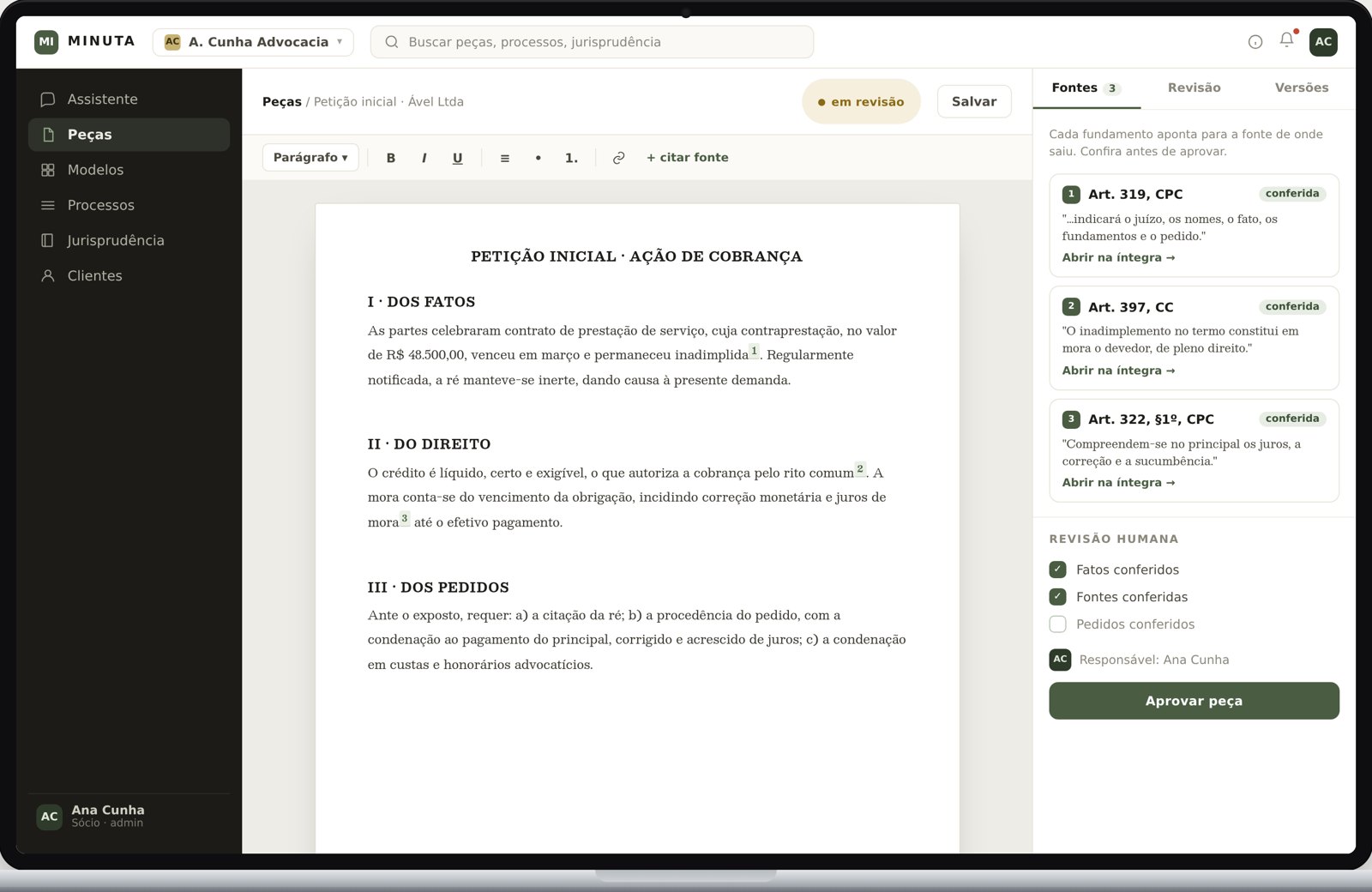
A verifiable source on every argument. Every citation of a statute, precedent, or ruling comes with a link to its origin. If it can't be checked, it doesn't go into the filing.
Mandatory human review. No filing leaves the system without going through approval. The AI drafts, the lawyer decides. The gate is part of the product, not a suggestion.
History and reuse. Every approved filing becomes the basis for the next one. The firm stops rewriting from scratch what it has already solved before.
Acceptance criteria before the code. What counts as a correct filing was defined with the firm before the first line was written. The ruler came first.
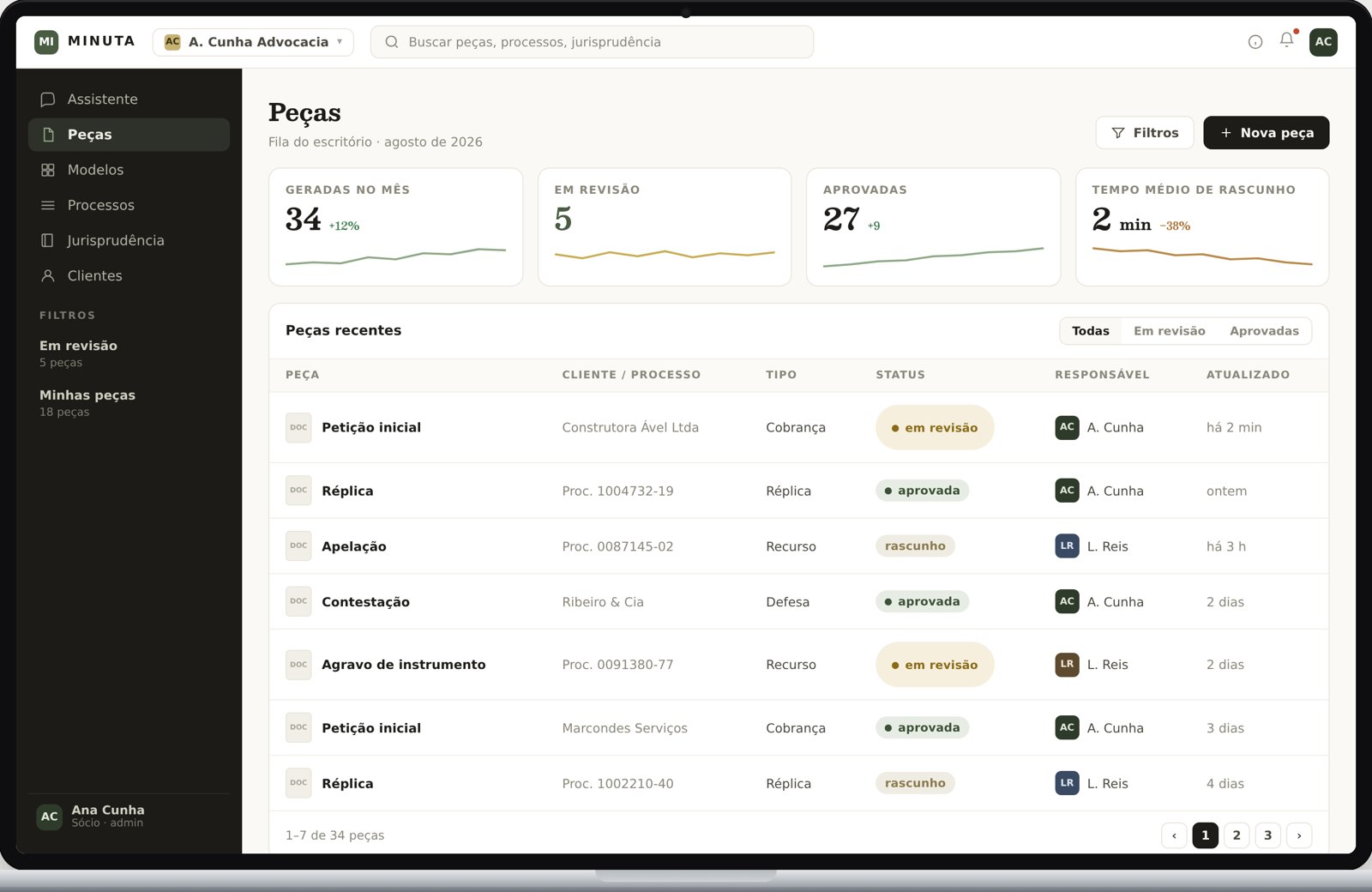
The dashboard shows each filing and where it stands in the flow. The editor opens the filing with its sources alongside and a review checklist that must be completed before approval.
MINUTA takes the skeleton-assembly work off the lawyer and gives the time back to what requires judgment. The repetitive part becomes a draft in minutes. The part that goes signed doesn't move without a verifiable source and without someone at the firm approving it. That's the ruler that was written before the code.
Tell us which process eats up your team's week. We design the system on top of what already exists.